Table of Content :
G'day, snowboard enthusiasts! If you reckon the 2026 Winter Olympics women's snowboarding halfpipe is going to be an absolute ripper, you're spot on. Taking place at the stunning Livigno Snow Park in Italy's Valtellina region, this event is shaping up to be one of the most electrifying competitions in Olympic history.
The 2026 Winter Olympics kicked off on 6 February and will run through 22 February, with the women's halfpipe qualifying rounds held on 11 February and the much-anticipated final scheduled for 12 February at 19:30 CET. This is the first Olympics to be co-hosted by two cities – Milano and Cortina d'Ampezzo – making it a truly unique event spread across Northern Italy's most spectacular winter landscapes.
Fair dinkum, the setting for these Games is something special. The 2026 Winter Olympics are being held across multiple venues in Northern Italy, with Livigno hosting all the freestyle skiing and snowboarding events, including the halfpipe. Located near the Swiss border in the Valtellina region, Livigno sits at an altitude of around 1,816 metres, providing perfect conditions for world-class competition.
The Livigno Snow Park has been purpose-built to Olympic specifications, featuring a halfpipe with 22-foot (6.7-metre) walls – the standard height that's been used since the 2010 Vancouver Games. This gives athletes the amplitude they need to pull off those jaw-dropping tricks that have become the hallmark of modern halfpipe competition.
The women's snowboard halfpipe has been an Olympic event since 1998 in Nagano, and we've seen the sport evolve dramatically over nearly three decades. What started with alley-oops and backside 540s has progressed to back-to-back 1080s and even double cork rotations.
At the 2026 Winter Olympics, we're witnessing a pivotal moment in the sport's history. For the first time, a snowboarder – male or female – has the opportunity to win three consecutive Olympic gold medals in the halfpipe. That's right, American superstar Chloe Kim is chasing a historic three-peat that would cement her legacy as arguably the greatest halfpipe snowboarder of all time.
Chloe Kim's journey to the 2026 Winter Olympics hasn't been smooth sailing. The 25-year-old from Torrance, California, has been battling a torn labrum in her left shoulder – an injury she sustained during a training crash in Switzerland just weeks before the Games. The injury required her to wear a shoulder brace and limited her training time leading up to Milano Cortina.
Despite the setback, Kim showed she's still the one to beat when she topped the qualifying round on 11 February with an impressive score of 90.25. Her first run was absolutely sensational, featuring a backside 720 followed by the first 1080 of the qualifying session. She was the only competitor to crack 90 points, finishing well ahead of Japan's Sara Shimizu (87.50) and American teammate Maddie Mastro (86.00).
"I feel good. Happy to be here," Kim told Olympics.com after her qualifying run. "There is definitely a lot of pressure, but I do think that the Olympics are so special because we have so much support globally."
Kim first burst onto the Olympic scene at PyeongChang 2018 when she was just 17 years old, becoming the youngest woman to win an Olympic snowboard gold medal. Her winning run scored a near-perfect 98.25 points, and she made history by landing back-to-back 1080s – a frontside 1080 followed by a switch frontside 1080 (cab).
Four years later at Beijing 2022, Kim became the first female snowboarder to successfully defend her Olympic halfpipe title. She scored 94.00 on her first run of the final, which was good enough for gold. She then used her remaining two runs to attempt new tricks, showing the kind of creative freedom that comes with being head and shoulders above the competition.
Now at the 2026 Winter Olympics, Kim's aiming to do what no halfpipe snowboarder has ever done before – win three consecutive Olympic golds. Even the legendary Shaun White, who won three Olympic golds in men's halfpipe (2006, 2010, 2018), didn't achieve them consecutively, having finished fourth in Sochi 2014.
Kim's dominance extends far beyond the Olympic arena. She's a three-time World Champion (2019, 2021, 2025), with her most recent title coming just weeks before the 2026 Winter Olympics. She's also won eight Winter X Games gold medals in superpipe, tying her with Shaun White for the most X Games halfpipe wins of all time.
In January 2025, Kim became the first woman to land a double cork 1080 (specifically, a cab double cork 1080) in a halfpipe competition at the Laax Open. She's also got five Laax Open titles to her name and made history in 2024 when she became the first woman to land a 1260 in competition.
Her trophy cabinet is absolutely chockers with accolades: she's won three ESPYs (Best Female Athlete, Best Female Olympian, and Best Female Action Sports Athlete), been named Time magazine's 100 Most Influential People, and won Laureus World Action Sportsperson of the Year two years running (2019-2020).
The biggest threat to Kim's three-peat might just come from 17-year-old South Korean sensation Gaon Choi. Sound familiar? That's the same age Kim was when she won her first Olympic gold. Choi has openly called Kim her idol, making this a proper full-circle moment.
Choi qualified for the final in sixth place with a score of 82.25, but don't let that fool you – she's been absolutely tearing up the World Cup circuit this season. She led the 2025-26 FIS Snowboard World Cup standings heading into the Olympics, having won three of five events. Her runs are known for their technical difficulty and style, often featuring switch tricks and big rotations.
"I met her when she literally started halfpipe snowboarding," Kim said about Choi at a press conference. "Obviously, my parents being immigrants [from Korea], this one definitely has hit pretty close to home."
Japan is bringing serious firepower to the 2026 Winter Olympics halfpipe competition. Leading the charge is Sara Shimizu, who finished second in qualifying with 87.50 points. Shimizu was the runner-up to Kim at the 2025 World Championships, and she's been working hard to close the gap.
Also representing Japan are Rise Judo (who qualified fourth with 84.75 points) and Sena Tomita, the bronze medallist from Beijing 2022. This Japanese trio has the depth and skill to challenge for medals, and they've been consistently strong on the World Cup circuit.
The competition from Japan reflects the country's investment in snowboarding programmes and its rich tradition in winter sports. They've been building a formidable pipeline of talent that's reshaping the competitive landscape.
Kim won't be flying solo for Team USA at the 2026 Winter Olympics. She's joined by Maddie Mastro, who qualified third with a career-best 86.00 points. Mastro, a three-time Olympian, just missed out on the final in Beijing 2022, but she's come back stronger than ever after dealing with her own injury challenges.
Also making the final is Bea Kim (no relation to Chloe), a 19-year-old from California who's been dubbed the future of American women's halfpipe. Bea qualified in 10th place with 76.75 points. At just 19, she's already established herself as a force to be reckoned with after jumping up from the junior circuit.
The United States has an incredible record in women's halfpipe, winning at least one medal at every Olympics since the event debuted in 1998. They've claimed multiple medals at four of the seven Games where it's been contested, showing the depth of American snowboarding talent.
Spain's Queralt Castellet, the silver medallist from Beijing 2022, is always a threat. She's known for her consistency and technical prowess, and she's been competing at the highest level for years.
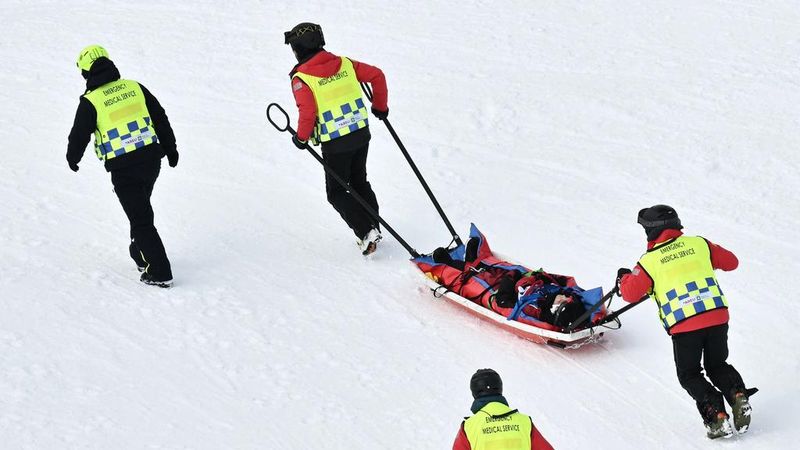
China's Liu Jiayu, the 2018 PyeongChang silver medallist, was competing at the 2026 Winter Olympics but unfortunately suffered a serious crash during qualifying when she caught a toe edge on her last hit. She was stretchered off but has since been confirmed free of spinal injury, though her Olympic campaign was cut short.
The women's snowboard halfpipe competition at the 2026 Winter Olympics follows a two-day format. On Day 1 (11 February), athletes competed in qualifying rounds, where 24 riders each got two runs down the Olympic halfpipe. Only their best score counted, and the top 12 advanced to the final.
On Day 2 (12 February), the 12 finalists will get three runs to showcase their best tricks. Again, only the highest score counts, so riders can use their additional runs to either play it safe or go for broke trying to land something spectacular.
The format creates heaps of drama because athletes know they've got multiple chances to nail their run. We've seen riders throw caution to the wind on their final runs, attempting tricks they've never landed in competition before.
Halfpipe runs are judged on several key criteria:
Scores are given out of 100, with judges looking for a complete package. A rider who goes massive on every hit with technical tricks, solid grabs, and clean landings is going to score higher than someone who plays it safe.
The judging panel consists of international experts who understand the nuances of each trick. They can distinguish between a stomped landing and a sketchy one, and they reward innovation and progression in the sport.
Modern Olympic halfpipes are engineering marvels. The Livigno Snow Park halfpipe measures 22 feet (6.7 metres) from the flat bottom to the lip – that's more than twice the height of the pipes used in the early days of the sport.
The pipe is semi-cylindrical, shaped like a giant U carved into the snow. Riders drop in from one side, building speed as they traverse the flat bottom, then launch up the opposite wall to perform aerial tricks. They go back and forth, hitting typically five to six features per run.
The increased height compared to early Olympic halfpipes has revolutionised the sport. Riders can now get the amplitude needed for complex rotations and multiple flips, which is why we've seen the progression from 540s to 1080s and beyond.
The progression of women's halfpipe snowboarding over the past 28 years has been nothing short of remarkable. When the event debuted at the 1998 Winter Olympics in Nagano, the halfpipe walls measured just 11.5 feet tall. Germany's Nicola Thost won gold with a run featuring a frontside alley-oop and backside 540 – tricks that would barely register in modern competition.
By Salt Lake City 2002, Kelly Clark of the United States won gold with runs emphasising style, grabs, and a frontside 720. The pipe walls had grown to 14.75 feet, allowing for more amplitude.
The 2006 Torino Games saw Hannah Teter (USA) land a frontside 900 – her signature trick and the first of its kind in women's Olympic competition. By 2010 in Vancouver, the pipes had reached the now-standard 22-foot height, though Australian Torah Bright won without a 900, instead showcasing two impressive 720s.
The real game-changer came in Sochi 2014, when American Kaitlyn Farrington won gold with a run that only included tricks with rotations of 540 degrees or higher. She was also the first woman to include a cork at the Olympics, opening the door for more technical aerial manoeuvres.
Then came PyeongChang 2018 and the Chloe Kim era. Her gold-medal run featured back-to-back 1080s – a frontside 1080 and a cab 1080 – a feat that brought women's tricks much closer to what the men were throwing down. Her performance set a new standard that other riders have been chasing ever since.
Now at the 2026 Winter Olympics, we're seeing even more progression. Kim's recent achievement of landing a double cork 1080 in competition and a 1260 shows that women's halfpipe is entering an entirely new dimension of difficulty and athleticism.
Livigno is an alpine valley town in Italy's Lombardy region, sitting at approximately 1,816 metres elevation in the Valtellina. It's near the Swiss border and has a reputation as one of Europe's premier winter sports destinations.
For the 2026 Winter Olympics, Livigno is hosting all freestyle skiing and snowboarding events, including halfpipe, slopestyle, big air, and snowboard cross. The Snow Park has been purpose-built to Olympic specifications, with world-class facilities for athletes and spectators alike.
The setting provides a spectacular backdrop for competition, with the Italian Alps rising majestically in the background. The high altitude ensures consistent snow conditions and cold temperatures that keep the halfpipe in pristine shape throughout the competition.
The women's snowboard halfpipe qualifying round took place on Wednesday, 11 February 2026, at 09:30 local time. The final is scheduled for Thursday, 12 February 2026, at 19:30 CET (13:30 ET).
For viewers around the world, the 2026 Winter Olympics are being broadcast on various platforms depending on your region. In Australia, you can catch all the action through Channel 9 and 9Now, while Americans can watch on NBC, Peacock, and NBCOlympics.com. The Olympic Channel via Olympics.com is also streaming events in selected regions.
These are Italy's fourth Olympics overall and the country's third Winter Games. Cortina d'Ampezzo previously hosted the 1956 Winter Olympics, making this a return to familiar territory.
What makes Milano Cortina 2026 special is that it's the first Winter Olympics to be officially co-hosted by two cities. Milano is primarily hosting ice events like hockey, figure skating, and speed skating, while Cortina and the surrounding Valtellina and Fiemme valleys host the snow events.
This is the most geographically spread-out Winter Olympics to date, spanning seven cities and four regions across Northern Italy. The opening ceremony took place at Milano's iconic San Siro Stadium on 6 February, while the closing ceremony is scheduled for Verona's ancient Arena di Verona on 22 February.
The Games feature 16 sports across various venues, from historic sites like the Cortina Curling Olympic Stadium (originally built for the 1956 Games) to brand-new facilities like the Cortina Sliding Centre. It's a proper celebration of Italy's rich Olympic heritage and its commitment to winter sports.
One of the most exciting aspects of the final is what Chloe Kim might have up her sleeve. She hinted at having "some things on my agenda" but wouldn't reveal details, saying she doesn't want to "ruin the fun."
Given her recent progression – landing a double cork 1080 and a 1260 in competition this season – she could potentially showcase either of these tricks on Olympic snow. Legendary snowboarder Shaun White, who was watching on at Livigno, suggested she might throw back-to-back 1080s again, the combo she used to win in Beijing.
What's clear is that Kim has the technical arsenal and competitive experience to push the boundaries. Whether she plays it safe to secure gold or goes for something never-before-seen at the Olympics will be one of the major storylines of the final.
The youth movement in women's halfpipe is real. Gaon Choi at 17 represents a new generation of riders who've grown up watching Kim dominate and are now ready to challenge for medals themselves.
Japan's deep roster also poses a significant threat. Sara Shimizu has been getting closer to Kim's level, and with the right run, she could definitely challenge for gold. Rise Judo and Sena Tomita add depth to Japan's medal chances.
The beauty of Olympic finals is that anything can happen. A clean run with big tricks from any of the top contenders could shake up the podium. The pressure is different when you're riding under lights at the Olympics, and we've seen favourites stumble and underdogs rise to the occasion.
Kim's shoulder injury is the elephant in the room. While she looked strong in qualifying and says her shoulder has been "very well-behaved," she'll need surgery after the Olympics. The question is whether she can hold it together for one more competition.
She's wearing a stabilising brace, which she's said has actually made her riding better in some ways by limiting unnecessary movement. But halfpipe is an incredibly demanding sport that puts enormous stress on the shoulders during rotations and landings. Her ability to manage this injury while performing at the highest level is absolutely remarkable.
Quick Stats:
Historical Gold Medallists:
The women's snowboard halfpipe final is scheduled for Thursday, 12 February 2026, at 19:30 CET (1:30 PM ET). The competition takes place under lights at the Livigno Snow Park in Italy's Valtellina region. All 12 finalists will get three runs, with their best score counting towards the final standings.
No, no halfpipe snowboarder – male or female – has ever won three consecutive Olympic gold medals. Shaun White won three golds (2006, 2010, 2018), but they weren't consecutive as he finished fourth in 2014. If Chloe Kim wins at Milano Cortina 2026, she'll make history as the first athlete to achieve this feat and become only the 11th athlete in Winter Olympic history to three-peat in any event.
The 2026 Winter Olympics are being held across Northern Italy, co-hosted by Milano and Cortina d'Ampezzo – the first Olympics to be officially co-hosted by two cities. Milano hosts ice events while Cortina and the Valtellina and Fiemme valleys host snow events. The snowboarding halfpipe takes place at Livigno Snow Park in the Valtellina region, near the Swiss border. The Games run from 6-22 February 2026.
Chloe Kim tore the labrum in her left shoulder during a training crash in Switzerland in late January 2026, just weeks before the Olympics. The labrum is a ring of cartilage lining the shoulder socket. Despite the injury, Kim competed wearing a shoulder brace and topped qualifying with 90.25 points. She'll require surgery after the Olympics, but she's said her shoulder has been trending in the right direction and hasn't popped out since the initial tear.
The primary challengers include 17-year-old South Korean sensation Gaon Choi, who led the World Cup standings this season; Japan's Sara Shimizu, who finished second in qualifying with 87.50; and American Maddie Mastro, who qualified third with 86.00. Japan's Rise Judo and Sena Tomita (the Beijing 2022 bronze medallist) are also strong contenders. Spain's Queralt Castellet, the Beijing silver medallist, brings experience and consistency to the final.
Halfpipe runs are scored out of 100 based on amplitude (height above the halfpipe lip), difficulty of tricks (rotations, inversions, grabs), execution and landing quality, variety and progression throughout the run, and overall impression and style. An international panel of expert judges evaluates each run, with riders getting their best of three runs counted in the final. Higher, more technical tricks with clean landings and good grabs score better.
Several factors make the 2026 Winter Olympics unique: it's the first co-hosted Olympic Games (Milano and Cortina), the most geographically spread-out Winter Olympics spanning seven cities and four regions, and it features a truly international competitive field with strong teams from the USA, Japan, South Korea, and Europe. The level of technical difficulty has also reached new heights, with potential for double cork rotations and 1260s that weren't even imaginable in earlier Olympics.
Yes! Australian viewers can watch the 2026 Winter Olympics on Channel 9 and stream events on 9Now. The women's halfpipe final takes place on Thursday, 12 February at 5:30 AM AEDT (19:30 CET). Given the time difference, you might want to set your alarm or catch the replay later in the day. Selected regions can also access Olympic Channel streaming via Olympics.com.
The 2026 Winter Olympics women's snowboarding halfpipe final is shaping up to be one of the most significant moments in the sport's history. Chloe Kim's quest for an unprecedented three consecutive Olympic golds is the headline story, but there's so much more to get excited about.
We're witnessing a generational clash between the established queen and hungry young challengers like Gaon Choi. We're seeing the technical progression of the sport reach new heights, with tricks that would've seemed impossible just a decade ago. And we're experiencing all of this in the stunning setting of Northern Italy's Alpine wonderland.







 Customer Services